Hearing And Understanding Speech
Know About Hearing And Understanding Speech
How do we hear sounds?
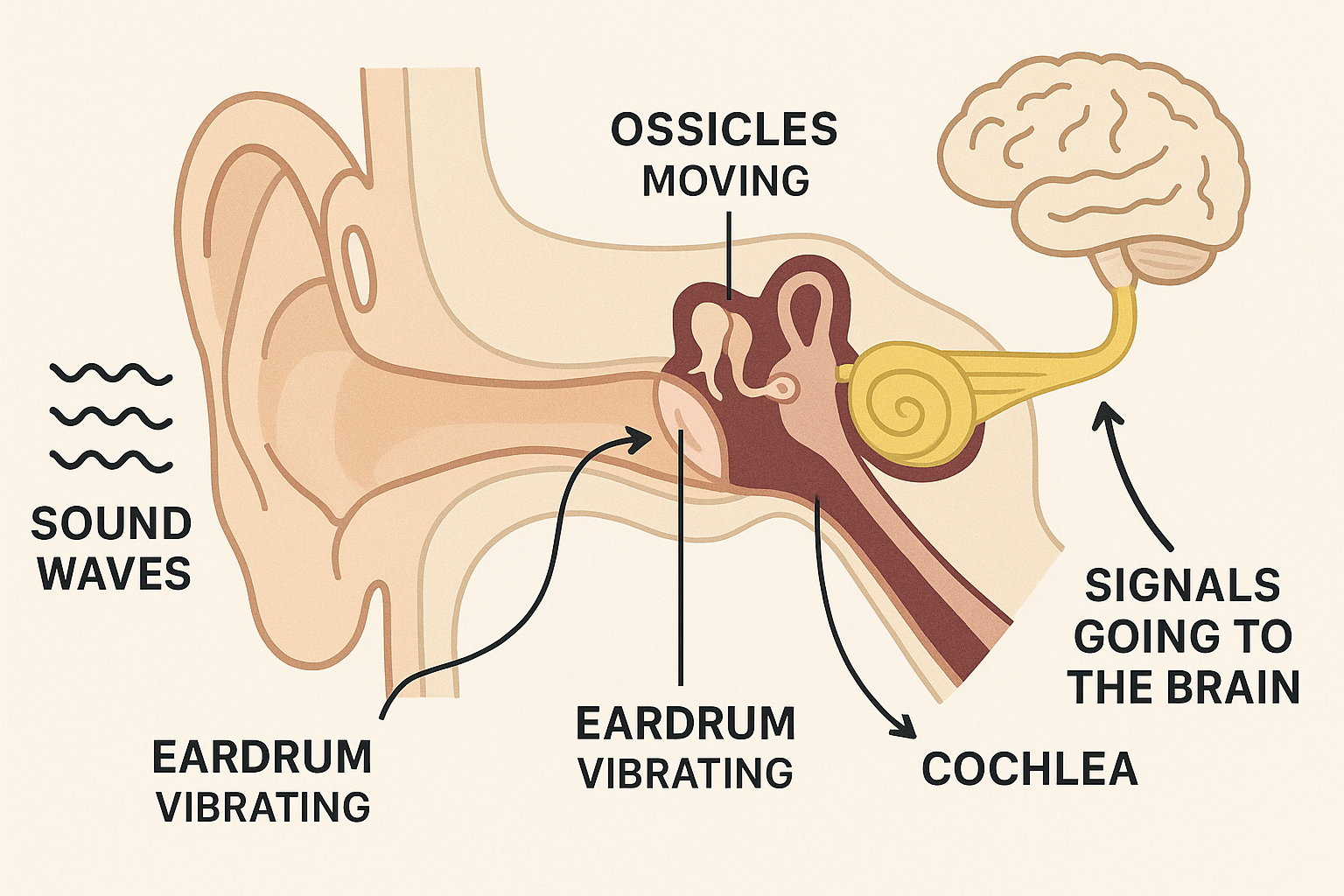
When sound waves enter the ear, they pass through three major parts:
- Outer ear – Collects sound waves and directs them to the ear canal.
- Middle ear – The eardrum vibrates, and three tiny bones (ossicles) amplify the sound.
- Inner ear (cochlea) – Converts these vibrations into electrical signals that travel via the auditory nerve to the brain.
- Brain – Processes the signals so we can recognize the sound.
Hearing is not just about the ear—it’s a partnership between the ear and the brain.
What’s the difference between hearing sounds and understanding speech?
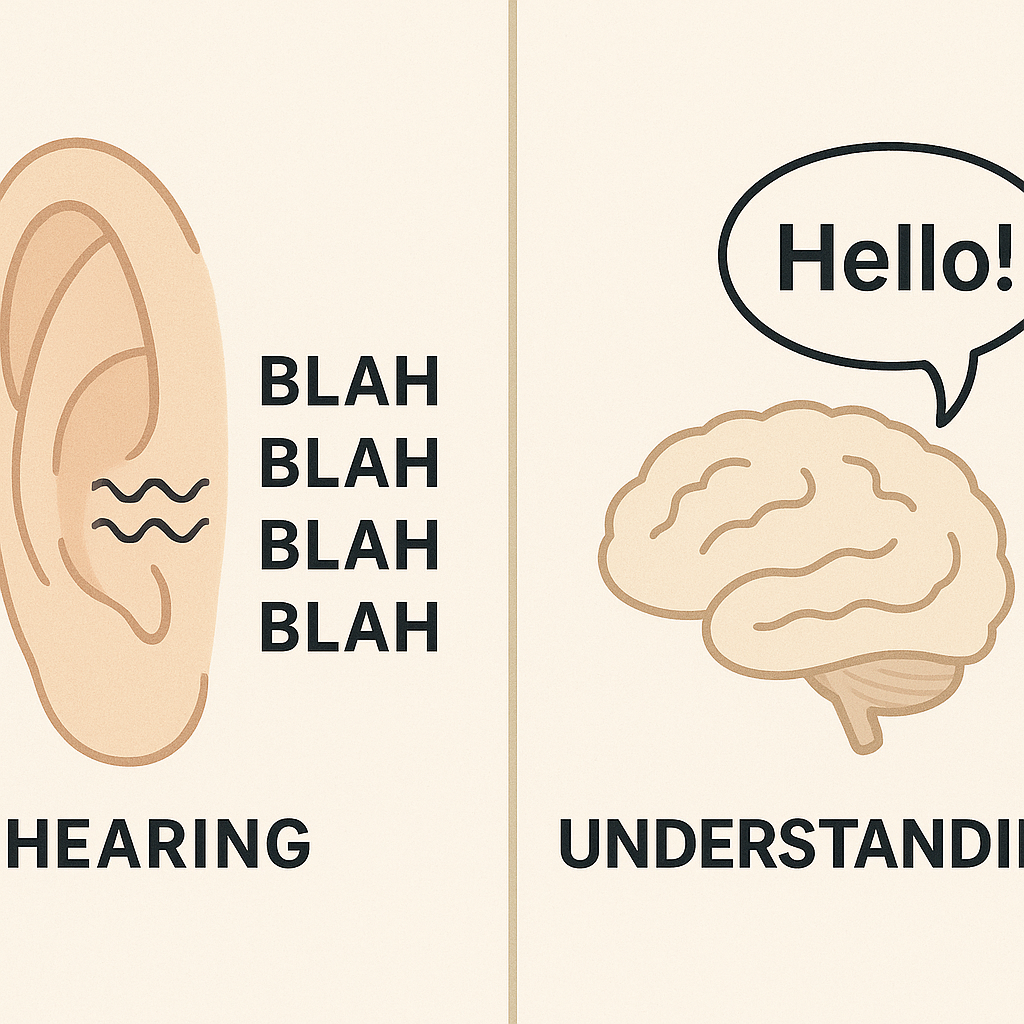
- Hearing sounds means detecting noise (like a dog barking, a car horn, or background chatter).
- Understanding speech means the brain decodes specific patterns of sound into words and meaning.
For example:
- You might hear someone speaking in another language but not understand what they are saying.
- Understanding speech requires the brain to filter, recognize, and attach meaning to sound patterns.
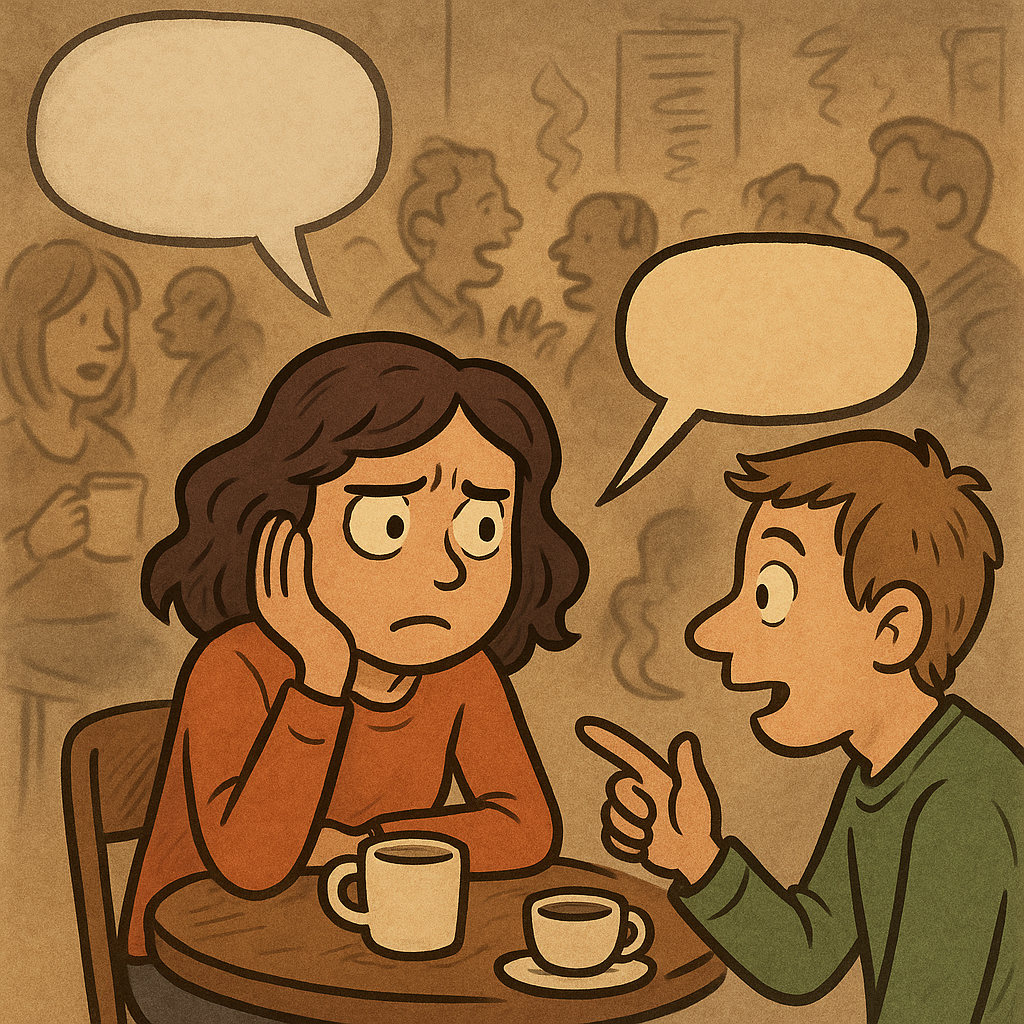
Why is it harder to understand speech in noisy or group situations?
Because:
- Background noise competes with speech signals, making it harder for the brain to separate voices.
- Multiple speakers, such as in a group conversation, require the brain to focus on one voice while ignoring others. This is known as the “cocktail party effect.”
- Hearing loss, even if mild, can reduce the ability to distinguish between similar speech sounds, especially consonants like s, f, t, and p.
- Cognitive load increases because the brain has to work harder to fill in the gaps, which can lead to fatigue.
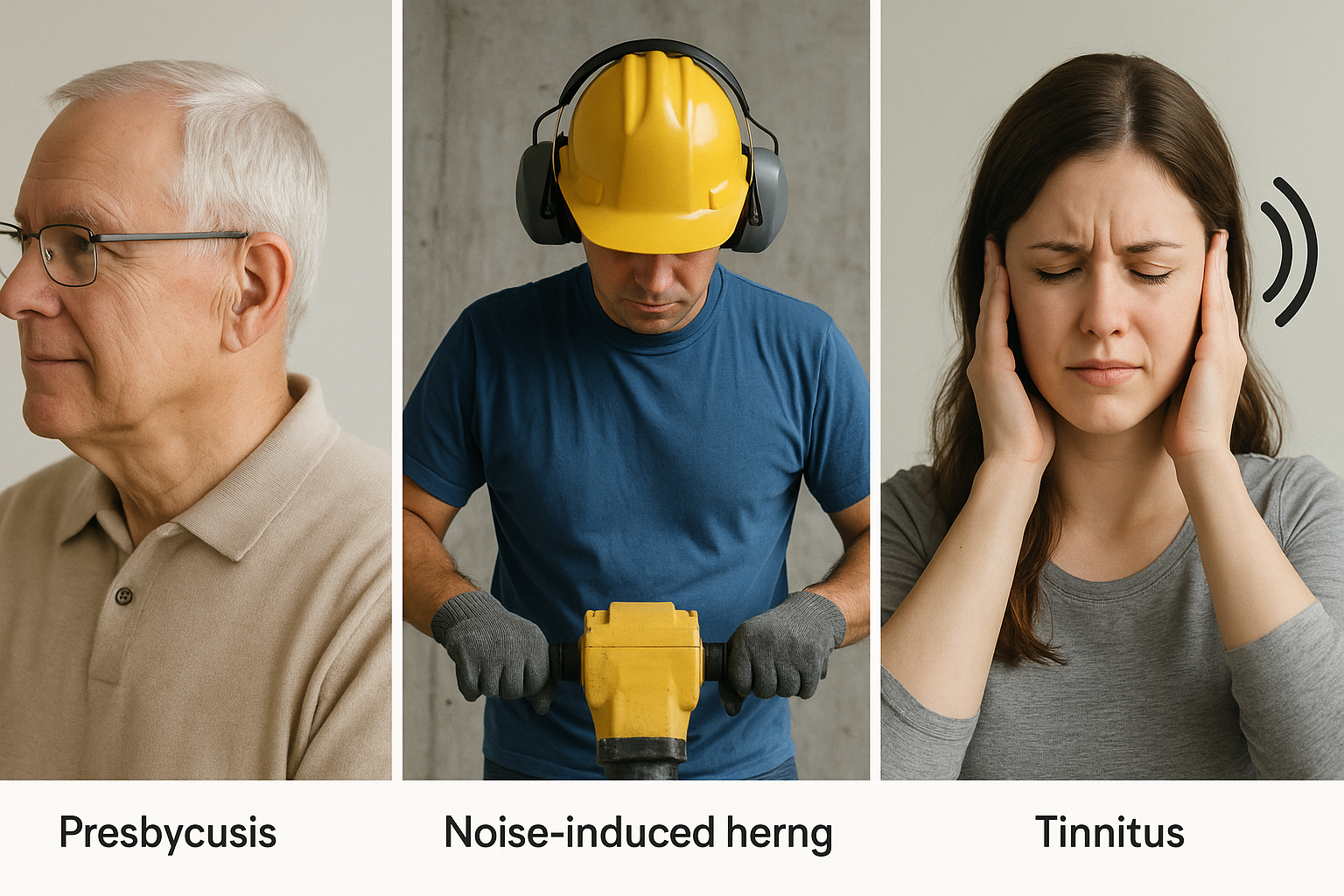
What are some common hearing disorders in adults?
- Presbycusis (age-related hearing loss): Gradual loss, especially high-pitched sounds.
- Noise-induced hearing loss: From long-term exposure to loud music, machines, or headphones.
- Meniere’s disease: Inner ear disorder causing vertigo, tinnitus, and fluctuating hearing loss.
- Sudden sensorineural hearing loss: Rapid loss of hearing, often in one ear, requiring urgent treatment.
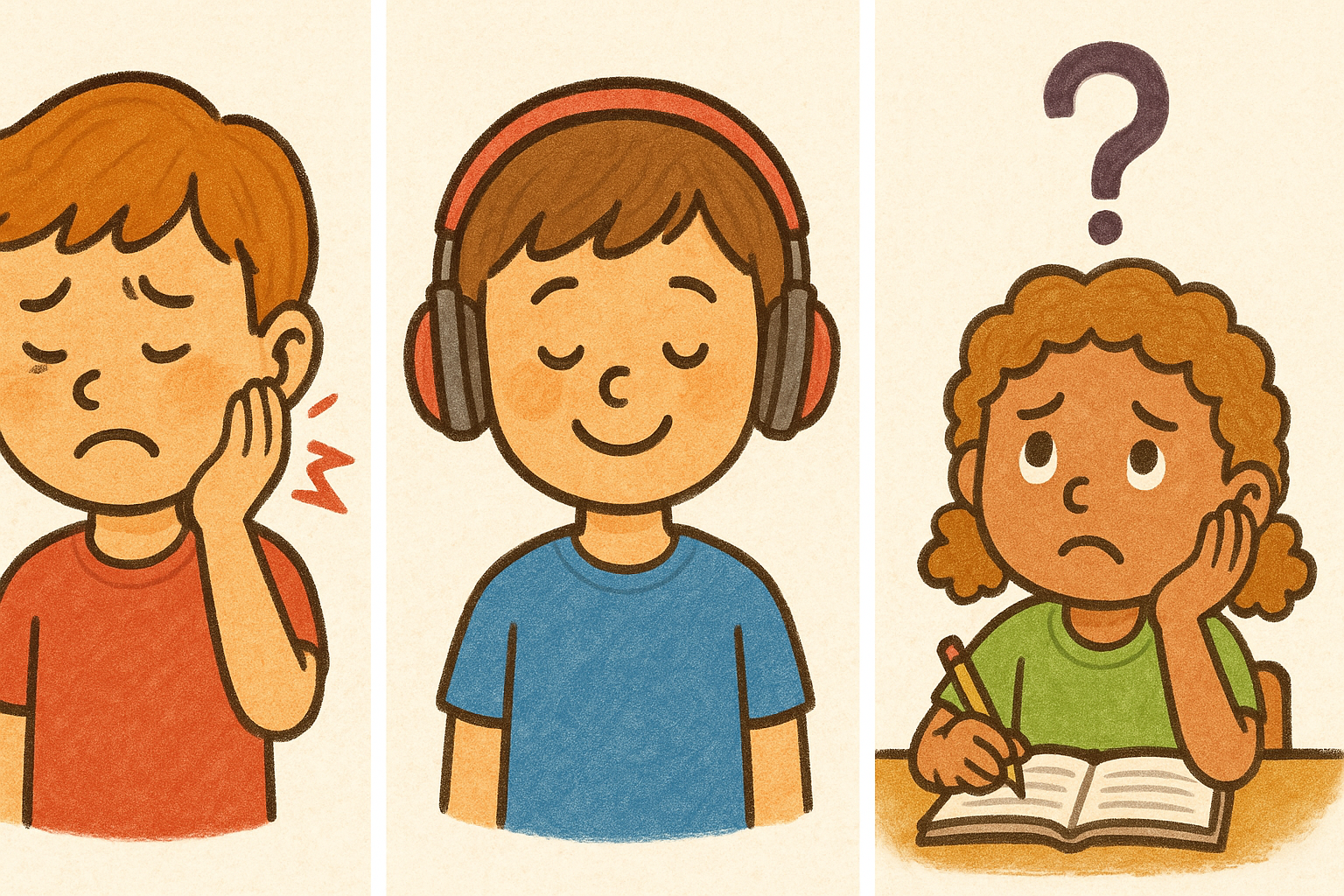
What are some common hearing disorders in children?
- Otitis media (ear infections): Fluid buildup in the middle ear, common in young children.
- Congenital hearing loss: Present at birth, may be genetic or due to prenatal factors.
- Auditory processing disorder (APD): Child can hear but struggles to process and understand speech.
- Temporary hearing loss from colds or allergies: Due to fluid or congestion.
- Noise-induced hearing loss: Increasing in children due to loud music or headphone use.
Key Takeaway:
- Hearing is about detecting sound.
- Understanding speech requires the brain to filter and interpret sound patterns.
- Noisy or group situations are harder because the brain has to work extra hard.
- Hearing disorders affect both adults and children but in different ways.